
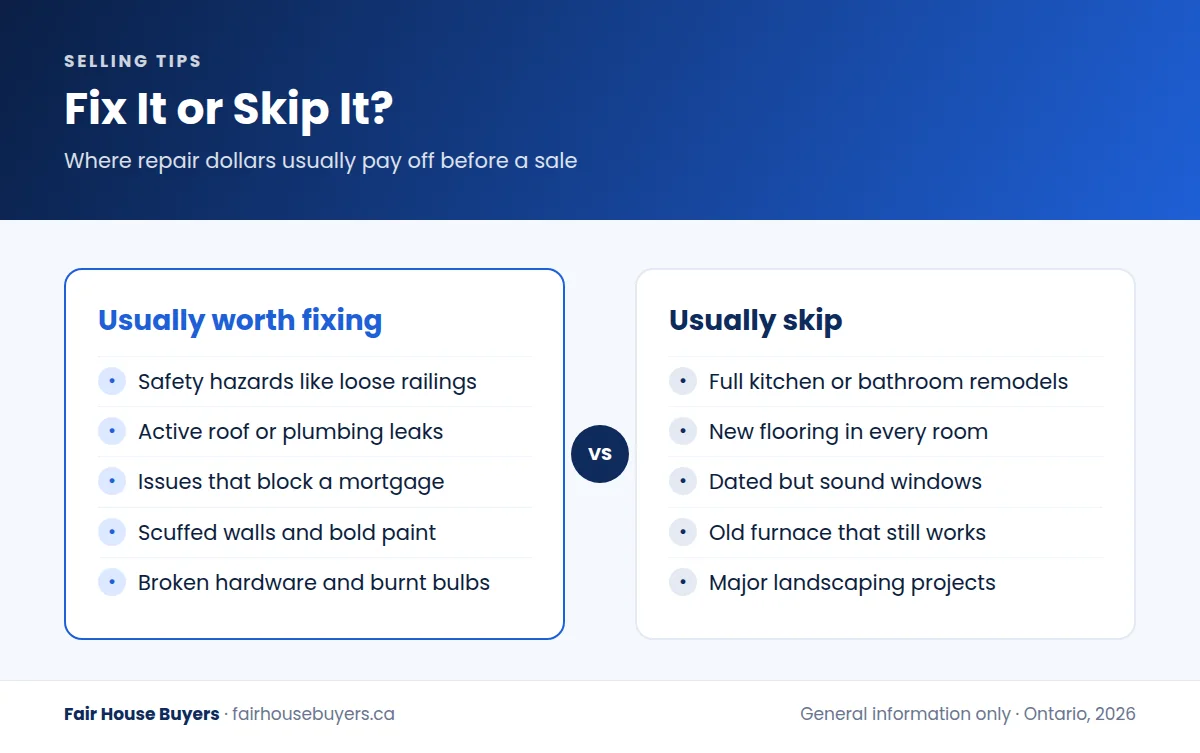
Here’s what not to fix when selling a house in Ontario: skip big cosmetic projects like kitchen or bathroom remodels, new flooring everywhere, new windows, and old systems that still work. Instead, fix anything unsafe, stop active leaks, and handle cheap repairs that scare buyers. Then price the rest in and disclose what you know.
The goal is simple. You want the most money in your pocket after costs, not the prettiest house on the street. This guide shows you where repair dollars pay off, where they don’t, and how to decide.
Key takeaways
- Most large renovations return less than they cost, so they rarely make sense right before a sale.
- Always fix safety hazards and active water leaks, because they can kill a deal or create legal risk.
- Cheap work like paint, cleaning and small repairs often gives the best return.
- Skipping a repair is fine. Hiding a known hidden defect is not.
- If the repair list is long, an as-is sale may net about the same with far less stress.
The rule: only fix it if it pays you back
Before you decide what not to fix when selling a house, run every repair through one test. Will it raise your sale price, or speed up the sale, by more than it costs? If not, leave it alone and let the buyer choose their own finishes.
Remember that repairs cost more than the contractor’s bill. You also pay carrying costs while the work drags on, such as mortgage, taxes, utilities and insurance. Plus, any price bump also raises your commission, since agents earn a percentage of the sale price.
The market matters, too. In August 2026, the GTA had 4.6 months of inventory and homes averaged 35 days on market, according to TRREB. With that much choice, buyers notice obvious problems. But they also push hard on price, so a costly upgrade may not earn its money back.
What not to fix when selling a house: 8 common money pits
These are the repairs sellers most often regret when they fix up a house before selling. Of course, every home is different, so treat this as a starting point and get local advice.
Big cosmetic upgrades
- Full kitchen remodel. Buyers have strong, personal taste in kitchens. Instead, clean it, paint it, and swap old cabinet hardware.
- Bathroom overhaul. A new vanity or re-caulked tub is enough. A full gut job rarely pays off before a sale.
- New flooring throughout. Fix a damaged spot, but don’t redo every room. Many buyers plan to pick their own floors anyway.
- Major landscaping. Mow, trim and add a few plants. Skip the new patio or pool.
Old but working systems
- An older furnace or water heater that still works. Buyers can see the age and will factor it into their offer. Have it serviced, then keep the receipt.
- Windows that are dated but sound. Replacing them is costly, and buyers rarely pay full value for new ones.
Small flaws buyers expect
- Hairline cracks in the driveway or walkway. These are normal wear, so they’re rarely worth repaving.
- Minor quirks in an older home. Features that met the rules when built, like a low basement ceiling, are part of the home’s character. Moving walls to fix them seldom pays.
Good to know: What about the roof?
A roof near the end of its life is a grey zone. Some buyers and insurers push back hard, while others just want a price cut. Get a quote first, then decide whether to replace it or offer a credit.
What you should fix before selling a house
Some repairs are almost always worth doing. They protect your price, keep deals from collapsing, and lower your legal risk.
Safety hazards and active leaks
Fix anything that could hurt someone, such as loose railings, exposed wiring, or a broken step. Also stop active leaks from the roof, plumbing or foundation. Water spreads, and a small leak today can become mould by closing day.
Problems that block financing or insurance
Most buyers need a mortgage and home insurance to close. So if a lender or insurer balks at a big issue, your deal can fall apart. Older homes with knob-and-tube wiring or an old oil tank can face this problem, so ask an expert what it would take to clear it.
Cheap fixes with a big visual payoff
Low-cost work often gives the best return. For example, fresh neutral paint, a deep clean, new light bulbs, working doorknobs, and patched holes make a home feel cared for. Buyers then assume you looked after the bigger things, too.
| Issue | Fix, skip or disclose? | Why |
|---|---|---|
| Active roof or plumbing leak | Fix | Leaks spread damage and scare buyers and inspectors |
| Loose railing or exposed wires | Fix | Safety risk and easy to repair |
| Scuffed walls, bold colours | Fix (paint) | Cheap, fast and makes rooms look bigger |
| Dated kitchen or bathroom | Skip | High cost, and buyers want their own style |
| Old furnace that works | Skip and service | Buyers price in age; service records build trust |
| Past basement flooding | Disclose | Hidden water issues can be latent defects |
Repair first, or sell as is?
Our free Walk-Away Calculator compares what you’d net from listing against a cash sale. Add your repair estimates and see which option leaves more in your pocket.
Don’t fix it when selling a house, but don’t hide it
Choosing not to fix something when selling a house is your right. However, covering up a problem is a different story. In Ontario, you must disclose latent defects you know about. Latent defects are problems a buyer wouldn’t spot on a reasonable inspection, and they make a home unfit to live in or dangerous.
The Real Estate Council of Ontario explains a seller’s duty to disclose in plain terms. For example, painting over a water stain to hide a known leak can leave you liable after closing. Meanwhile, the property information statement is optional, as RECO’s page on property information statements notes. Still, anything you write on it must be true.
Watch out: Paint is not a cover-up tool
Fresh paint is great for scuffs and bold colours. But using it to hide mould, stains or cracks you know about can turn a simple sale into a lawsuit. When in doubt, disclose it.
Example: should you fix the kitchen before selling a house?
Let’s run hypothetical numbers on the most common fix people make before selling a house. Say a full kitchen remodel costs $40,000 and takes two months. Your agent thinks it might add $25,000 to the sale price.
| Item | Amount |
|---|---|
| Extra sale price | +$25,000 |
| Kitchen remodel | −$40,000 |
| Extra commission on $25,000 (4% + 13% HST) | −$1,130 |
| Two months of carrying costs at $3,000 | −$6,000 |
| Result | −$22,130 |
In this example, the remodel loses you about $22,000. On the other hand, $2,000 of paint and cleaning that helps the home sell faster can pay for itself many times over. Your numbers will differ, so run them before you start any project. For a full list of selling costs, see our breakdown of Ontario selling costs.
How to decide what to fix when selling a house: 5 steps
Use these steps to sort your list before you fix anything in the house you’re selling. Then you’ll spend only where it counts.
Get a pre-listing inspection. It shows you what a buyer’s inspector will find, so nothing surprises you later.
Sort the list into three piles. Put safety and leaks in “fix”, cosmetic upgrades in “skip”, and hidden issues in “disclose”.
Get real quotes. Ask two contractors to price the “fix” pile, including how long the work will take.
Run the payback test. Ask a local agent what each repair adds to the price. Only do the ones that clearly pay.
Compare against an as-is sale. If the list is long, price out selling as is before you spend a dollar.
When selling a house as is beats fixing it
Sometimes the repair list is simply too long, too costly, or too stressful. That’s common with estates, rentals after a tough tenancy, or homes with water or fire damage. In those cases, an as-is sale in Ontario can make more sense.
A cash buyer like Fair House Buyers buys as is, with no repairs, no showings and no commission. You’ll usually get a written offer within 24 hours. That said, a cash offer is almost always below full retail value, so compare it honestly. Our guide on cash offers vs. listing with a realtor walks through the trade-offs.
This article is general information, not legal or tax advice. Talk to a real estate lawyer or accountant about your situation.
Frequently asked questions
Skip large cosmetic projects such as kitchen and bathroom remodels, new flooring throughout, new windows, and major landscaping. Also leave older systems that still work, like a furnace, and just service them. Instead, fix safety hazards, active leaks, and cheap items like paint and broken hardware. Disclose any known hidden defects you choose not to repair.
Problems that are costly, hidden or hard to fix hurt value the most. These include foundation or structural issues, water damage and mould, a failing roof, and outdated wiring that insurers dislike. Some things you can’t change also matter, such as a busy road. Poor upkeep and strong odours can also drag down offers, even though they’re cheap to fix.
If you know about hidden water damage that could make the home unfit or unsafe, you should disclose it. RECO says sellers must reveal known latent defects. Visible stains are patent defects, but painting over them to hide a problem can make you liable. When unsure, disclose it in writing and talk to a real estate lawyer.
Usually not. Once the sale closes, repairs become the buyer’s job. The main exceptions are when a seller hid a problem, misstated facts, or failed to disclose a known latent defect. Your agreement may also include promises, such as appliances working on closing day. Read your contract closely and keep your disclosures honest.